Course 12 of 12
Ethics and Governance: the books worth your time
Hard choices between two rights, how companies and boards fail, and how a board should work with its CEO.
6 books ranked0 full reviewsUpdated
Why this matters to an executive
Ethics and governance used to be the course executives took least seriously. That changes the first time someone asks you to approve a number you are not sure about, or the first time you present to a board that asks nothing. Most corporate failures are not the work of villains. They come from ordinary people making a series of small accommodations, each of which seemed reasonable that quarter.
The subject has two halves. Ethics is about your own decisions: what you sign, what you allow your team to do, what you say when the honest answer is unwelcome. Governance is about the system around those decisions: boards, audit committees, incentives and the information that reaches the top. Executives need both, and they need them before they join a board, not after.
How I ranked these
I ranked on how much a book helps an executive see trouble early, in their own decisions or in the organization around them. Practical value beat moral philosophy, and case books earned their place by teaching patterns rather than gossip.
Defining Moments comes first because it treats ethics as a manager experiences it: a choice between two legitimate duties, made under time pressure. Badaracco draws on the work of philosophers but keeps the focus on the decision in front of you. Why Smart Executives Fail is second. Its cases are dated, but the warning signs it identifies in leaders and companies still apply.
Then read the two cases. Bad Blood is the shorter and easier entry point. The Smartest Guys in the Room is longer and better on incentives and accounting judgment.
Boards That Lead and Financial Shenanigans are the advanced pair. They rank lower only because they serve narrower readers: new directors and executives reporting to a board for the first, audit committee members and anyone approving acquisitions for the second. If that is you, move them to the top.
Where people go wrong
The common mistake is treating ethics as compliance. Compliance tells you what the rules are. It does not help when the rules are silent, when two of them conflict, or when the pressure comes from your own targets. Those are the situations that end careers.
The second mistake is reading corporate scandals as stories about other people. The useful reading asks where the warning signs appeared, who saw them and why nobody acted. Then look for the same signs in your own organization: targets nobody questions, a leader nobody contradicts, numbers that are always just on plan.
Governance depends on reading the numbers. Pair this list with accounting for managers, and for the board-facing side of senior roles, general management.
The reading list
6 ethics and governance books, ranked
Foundation start anywhere · Core the heart of the course · Advanced after the core title
1 
Defining Moments
Joseph L. Badaracco Jr. · 1997 · Core · about 5 h · $
On choices between two rights rather than right and wrong. The most practical ethics book for managers.
Full review comingBuy on Amazon ↗
2 
Why Smart Executives Fail
Sydney Finkelstein · 2003 · Core · about 9 h · $
A study of corporate failures and the habits behind them. Dated cases, durable warning signs.
Full review comingBuy on Amazon ↗
3 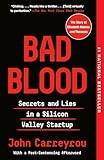
Bad Blood
John Carreyrou · 2018 · Foundation · about 10 h · $
The Theranos investigation. A case study in what boards fail to ask, told as a thriller.
Full review comingBuy on Amazon ↗
4 
The Smartest Guys in the Room
Bethany McLean & Peter Elkind · 2003 · Core · about 16 h · $
The definitive account of Enron. Long, but every chapter is a lesson in incentives and accounting judgment.
Full review comingBuy on Amazon ↗
5 
Boards That Lead
Ram Charan, Dennis Carey & Michael Useem · 2013 · Advanced · about 7 h · $$
How a board should work with a CEO rather than monitor or rubber-stamp. For directors and those reporting to boards.
Full review comingBuy on Amazon ↗
6 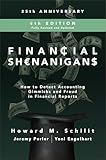
Financial Shenanigans
Howard M. Schilit, Jeremy Perler & Yoni Engelhart · 1993 · Advanced · about 10 h · $$
A catalogue of how companies flatter their numbers. Read it before you sign off on anyone's forecast, including your own.
Full review comingBuy on Amazon ↗
Price bands are for the paperback at the time of review. Amazon links are affiliate links; as an Amazon Associate I earn from qualifying purchases.
Questions people ask
What is the best business ethics book for managers?
Defining Moments by Joseph Badaracco. It deals with choices between two rights, such as loyalty to a team against fairness to a customer, rather than right against wrong. That is the kind of decision managers face. It is not a compliance guide; for that, use your company's own policies and legal advice.
What should a new board member read?
Start with Boards That Lead by Ram Charan, Dennis Carey and Michael Useem, which explains how a board should work with a CEO. Then read Bad Blood for a case of what boards fail to ask. If you sit on an audit committee, add Financial Shenanigans once you read financial statements comfortably.
Is Bad Blood useful for business readers or just a good story?
Both. John Carreyrou's account of Theranos reads like a thriller, but it is also a governance case: a board with prominent names that did not ask the questions a scientific or financial expert would have. Read it alongside Why Smart Executives Fail for the general warning signs behind such failures.
What is the best book about the Enron scandal?
The Smartest Guys in the Room by Bethany McLean and Peter Elkind. It is long, but it shows how incentives, aggressive accounting and weak oversight combined. Finance and audit committee members get the most from it. If you want a shorter governance case, read Bad Blood first.