Course 04 of 12
Strategy: the books worth your time
Tell a real strategy from a budget with goals attached, and understand where durable advantage comes from.
8 books ranked4 full reviewsUpdated
Short on time? See the quick references for strategy →
Why this matters to an executive
Most companies have a strategic plan. Far fewer have a strategy. The plan is usually a set of targets, a budget and a list of initiatives, and nobody can say which competitor it beats or why customers will choose you over them. Executives sign off on these documents every year, and the cost shows up later as spread-thin investment and initiatives that never compound.
Strategy as a subject teaches two things. First, how to judge whether a plan contains real choices. Second, where lasting advantage comes from, so you can tell a position worth defending from one that will erode. Both apply directly to the work of a senior manager, whether or not "strategy" is in your title.
How I ranked these
I ranked by how much a book improves the strategic decisions a working executive actually makes. Good Strategy Bad Strategy is first because it gives you a test to apply to your own planning, built on the idea that a strategy needs a diagnosis, a guiding policy and coherent actions .
Competitive Strategy is second. Porter is long and heavy going, but industry analysis starts here, and you will understand every later framework better for having read the source. Playing to Win is third: the best process book on the list, structured as a cascade of linked choices, with more Procter & Gamble examples than you need.
7 Powers and The Innovator's Dilemma are fourth and fifth. Helmer explains what makes advantage durable; Christensen explains how incumbents lose it. Competition Demystified and Blue Ocean Strategy follow. Zero to One is last because its essays raise good questions but give little method.
My reading order: Rumelt, then Porter, then Helmer. Add Christensen if your business faces a cheaper, simpler entrant.
Where people go wrong
The common mistake is collecting frameworks. A manager reads five strategy books and comes away with five-forces diagrams, strategy canvases and a SWOT template, and the next plan is the same set of goals in new boxes. Frameworks organize thinking; they do not do it. The question each book should leave you with is what you will stop doing, because a strategy that rules nothing out is not one.
The second mistake is reading strategy apart from the numbers. An advantage that does not show up in margins or returns on capital is a story. Pair this hub with corporate finance so you can check whether a position you believe in is actually earning more than its cost of capital.
The reading list
8 strategy books, ranked
Foundation start anywhere · Core the heart of the course · Advanced after the core title
1 
Good Strategy Bad Strategy
Richard Rumelt · 2011 · Core · about 9 h · $
The most useful strategy book for a working executive: it teaches you to spot a fake strategy in your own planning deck.
2 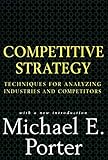
Competitive Strategy
Michael E. Porter · 1980 · Advanced · about 16 h · $$
The source text for industry analysis. Dense and long, but every strategy framework you meet afterwards borrows from it.
3 
Playing to Win
A.G. Lafley & Roger L. Martin · 2013 · Core · about 7 h · $
Five questions that turn strategy into a set of choices. Excellent structure, a little too fond of Procter & Gamble.
4 
7 Powers
Hamilton Helmer · 2016 · Advanced · about 6 h · $$
The tightest modern account of durable competitive advantage. Short, demanding and worth rereading.
Full review comingBuy on Amazon ↗
5 
The Innovator's Dilemma
Clayton M. Christensen · 1997 · Core · about 8 h · $
The theory every incumbent executive needs to understand, illustrated with disk drives you will have to push through.
6 
Competition Demystified
Bruce Greenwald & Judd Kahn · 2005 · Advanced · about 12 h · $$
Strips Porter down to the one force that matters most: barriers to entry. Excellent case chapters.
Full review comingBuy on Amazon ↗
7 
Blue Ocean Strategy
W. Chan Kim & Renée Mauborgne · 2005 · Core · about 8 h · $
The strategy canvas is a genuinely useful workshop tool. The rest of the book oversells how often uncontested markets exist.
Full review comingBuy on Amazon ↗
8 
Zero to One
Peter Thiel & Blake Masters · 2014 · Foundation · about 4 h · $
Provocative essays on monopoly and contrarian bets. Useful for its questions, less so as a guide.
Full review comingBuy on Amazon ↗
Price bands are for the paperback at the time of review. Amazon links are affiliate links; as an Amazon Associate I earn from qualifying purchases.
Questions people ask
What is the best strategy book for executives?
Good Strategy Bad Strategy by Richard Rumelt. It explains what a strategy has to contain and shows how to recognize the fake kind: goals, slogans and budgets presented as a plan. It is readable in a few evenings and applies directly to the next planning cycle. Read Porter's Competitive Strategy afterwards for industry analysis.
Is Porter's Competitive Strategy still worth reading?
Yes, if you take strategy seriously. It is the source for five forces and generic strategies, and most frameworks you meet later borrow from it. It is long and dense, so read it after a shorter book like Rumelt's, and expect to spend real time on the industry analysis chapters.
Good Strategy Bad Strategy or Playing to Win?
Read Good Strategy Bad Strategy first. It teaches you to diagnose whether a strategy is real. Playing to Win is better as a working process: five linked choices you can run with a leadership team. I would use Rumelt to critique a plan and Lafley and Martin to structure the workshop that builds it.
What book explains competitive advantage best?
7 Powers by Hamilton Helmer is the tightest modern account: seven sources of durable advantage, each with the conditions that make it last. It is short but demanding. Competition Demystified by Greenwald and Kahn covers similar ground through barriers to entry, with stronger case chapters.