Course 01 of 12
General Management: the books worth your time
How the general manager's job actually works: time, team output, transitions and the whole-business view.
8 books ranked4 full reviewsUpdated
Why this matters to an executive
Every other course on this site teaches a function. General management is the job of holding the functions together when they disagree. The finance team wants the capital plan cut, sales wants more headcount, operations wants the plant upgrade, and someone has to decide by the end of the quarter. That someone is the general manager.
Most people arrive in the role from one function, and they keep managing like a functional expert. They review the numbers they understand and wave through the ones they do not. The books here are about the other habits: how to spend your own time, how to multiply the output of the people under you, how to think about capital, and how senior people fail.
How I ranked these
I ranked by how directly a book changes what you do in a working week. High Output Management comes first because Grove gives you methods you can use on Monday, built on the idea that a manager's output is the output of their organization . The Effective Executive is second because it is short and it attacks the first problem most senior people have, which is that their calendar belongs to everyone else.
The two primers sit third and fourth. The Ten-Day MBA tracks the real syllabus more closely; The Personal MBA covers more ground with less depth. Pick one. They are maps, and you read a map to decide where to go next, not as the destination.
The Outsiders is here because capital allocation is a general manager's decision even when the CFO prepares it. Why Smart Executives Fail earns its place as a list of warning signs. The Portable MBA is last: its faculty-written chapters go deeper than the primers, but the quality varies by author.
My suggested order: High Output Management first, then The Effective Executive, then one primer to see the gaps in your knowledge. After that, go to the subject hubs, starting with accounting for managers and strategy.
Where people go wrong
The common mistake is reading a primer and stopping. A book that covers the whole MBA in a few hundred pages gives you the vocabulary, and the vocabulary is enough to sound competent in a meeting. It is not enough to challenge a discount rate or a pricing assumption. Use the primer to find the two or three subjects where you are weakest, then read a real book in each.
The second mistake is treating general management as leadership in the motivational sense. The books that hold up are mostly about mechanics: how meetings run, how decisions get made, where the money goes. If a book on this list feels dry, that is usually the part worth reading. For the people side of the job, the leadership and organizational behavior hub goes further.
The reading list
8 general management books, ranked
Foundation start anywhere · Core the heart of the course · Advanced after the core title
1 
High Output Management
Andrew S. Grove · 1983 · Core · about 8 h · $
The operating manual for middle and senior managers. Grove treats management as production, and it works.
2 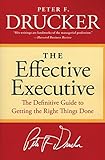
The Effective Executive
Peter F. Drucker · 1967 · Foundation · about 5 h · $
Short, old and still the best book on how a senior person should spend their time. Read the chapter on time first.
3 
The Ten-Day MBA
Steven Silbiger · 1993 · Foundation · about 12 h · $
Closer to the actual MBA syllabus than any other primer, with the dated case examples that come with it.
4 
The Personal MBA
Josh Kaufman · 2010 · Foundation · about 9 h · $
The best single map of business vocabulary, but a map is not the territory: use it to orient, not to decide.
5 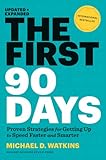
The First 90 Days
Michael D. Watkins · 2003 · Foundation · about 6 h · $
The transition playbook. Read it the week you accept the job, not the week you start.
Full review comingBuy on Amazon ↗
6 
The Outsiders
William N. Thorndike Jr. · 2012 · Core · about 7 h · $
Eight CEOs who treated capital allocation as the job. It will change what you ask your CFO.
Full review comingBuy on Amazon ↗
7 
Why Smart Executives Fail
Sydney Finkelstein · 2003 · Core · about 9 h · $
A study of corporate failures and the habits behind them. Dated cases, durable warning signs.
Full review comingBuy on Amazon ↗
8 
The Portable MBA
Robert F. Bruner et al. · 1990 · Core · about 15 h · $$
Faculty-written chapters that go deeper than the primers, uneven because every chapter has a different author.
Full review comingBuy on Amazon ↗
Price bands are for the paperback at the time of review. Amazon links are affiliate links; as an Amazon Associate I earn from qualifying purchases.
Questions people ask
What is the best general management book for a new executive?
High Output Management by Andrew Grove. It treats management as a production process and gives you working tools for meetings, one-on-ones, planning and performance reviews. If your problem is your own calendar rather than your team's output, read The Effective Executive by Peter Drucker first; it is shorter and goes straight to how a senior person spends time.
Is The Personal MBA or The Ten-Day MBA better?
The Ten-Day MBA follows the shape of a real MBA syllabus course by course, so it is the better primer if you are about to start a program. The Personal MBA is a broader map of business concepts and vocabulary. Read one, not both, and treat either as orientation before the subject books.
Can books replace an MBA in general management?
They can cover most of the content. Books will not give you the case discussions, the network or the pressure of being graded alongside other managers. If you want the knowledge without the degree, read a primer for the map, then one serious book per subject, and apply each to a live decision at work.
What should I read before starting a new senior role?
The First 90 Days by Michael Watkins, ideally the week you accept the offer. It is a transition playbook for diagnosing the situation you are walking into and securing early wins. Follow it with High Output Management once you are in the seat and need to run the team.