Course 02 of 12
Accounting for Managers: the books worth your time
Read the three statements, see where the numbers are judgment, and ask better questions of finance.
5 books ranked1 full reviewUpdated
Short on time? See the quick references for accounting for managers →
Why this matters to an executive
Accounting is the language your board, your bank and your CFO use to describe your decisions back to you. If you cannot read it, you hear the conclusions without being able to test them. A margin improvement might be a real gain, or it might be a change in how inventory is valued or when revenue is recognized. A manager who cannot tell the difference is relying on someone else's judgment for every number that matters.
You do not need to become an accountant. You need to read three statements, see how they connect, and know which lines are estimates. That is a few weeks of reading, and it pays back the first time you sit through a budget review.
How I ranked these
My main criterion was whether a book teaches a manager to question numbers, not merely to recite definitions. Financial Intelligence ranks first because it does both and is written for people outside finance. It also crosses over into corporate finance, which is where most managers need to go next.
Financial Statements by Thomas Ittelson is second. It follows one company through a long sequence of transactions and shows each one landing on the income statement, balance sheet and cash flow statement . Seeing the same event hit all three is what makes the connections stick.
Accounting Made Simple is third only because it is thin. It is the right first book if accounting makes you nervous; read it in an evening and move on. How to Read a Financial Report goes deeper on the balance sheet and income statement links, but it is dry. Financial Shenanigans is last because it assumes you already read statements fluently.
Reading order, if you are starting from nothing: Accounting Made Simple, then Financial Intelligence, then Ittelson. Add Financial Shenanigans once you are reviewing other people's forecasts or acquisition targets.
Where people go wrong
The usual mistake is learning accounting as a set of definitions and ratios. You memorize current ratio and gross margin, and you still cannot say why profit went up while cash went down. The ratios are easy to look up. The skill is following a transaction through the statements and knowing what it does to each.
The second mistake is treating reported numbers as facts. Depreciation lives, bad-debt reserves, revenue timing and inventory valuation are all choices made by people, inside rules that allow a range. A manager does not need to second-guess every one. You do need to know which choices drive your own unit's numbers, and to ask about them when they change.
The reading list
5 accounting for managers books, ranked
Foundation start anywhere · Core the heart of the course · Advanced after the core title
1 
Financial Intelligence
Karen Berman & Joe Knight · 2006 · Foundation · about 7 h · $
The finance book I would hand to any newly promoted manager. Plain English, and honest about where the numbers are judgment.
2 
Financial Statements
Thomas R. Ittelson · 1998 · Foundation · about 6 h · $
Walks one company through dozens of transactions and shows each on all three statements. The visual approach works.
Full review comingBuy on Amazon ↗
3 
Accounting Made Simple
Mike Piper · 2008 · Foundation · about 2 h · $
Debits, credits and the three statements in an evening. Too thin to be your only book, perfect as the first.
Full review comingBuy on Amazon ↗
4 
How to Read a Financial Report
John A. Tracy & Tage C. Tracy · 1980 · Core · about 7 h · $
Thorough on the links between balance sheet and income statement. Dry, but the connections it draws are the useful part.
Full review comingBuy on Amazon ↗
5 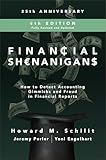
Financial Shenanigans
Howard M. Schilit, Jeremy Perler & Yoni Engelhart · 1993 · Advanced · about 10 h · $$
A catalogue of how companies flatter their numbers. Read it before you sign off on anyone's forecast, including your own.
Full review comingBuy on Amazon ↗
Price bands are for the paperback at the time of review. Amazon links are affiliate links; as an Amazon Associate I earn from qualifying purchases.
Questions people ask
What is the best accounting book for non-accountants?
Financial Intelligence by Karen Berman and Joe Knight. It explains the income statement, balance sheet and cash flow statement for managers rather than accountants, and it is candid about where the figures depend on judgment. If you want something even gentler to start, read Accounting Made Simple in an evening first.
How can a manager learn to read financial statements quickly?
Start with Accounting Made Simple for the basic mechanics, then work through Thomas Ittelson's Financial Statements, which follows one company through a long series of transactions and shows each on all three statements. Then open your own company's annual report and trace three or four line items you recognize.
Do I need to learn debits and credits as a manager?
Only enough to know what a journal entry is and why every transaction touches two accounts. You will rarely post one yourself. What you need is the logic of how a sale, a purchase or a write-off moves through the statements, which Accounting Made Simple and Ittelson's book both teach without bookkeeping drills.
Which accounting book helps detect manipulated numbers?
Financial Shenanigans by Howard Schilit and his co-authors catalogs the ways companies flatter revenue, earnings and cash flow. It is an advanced read, so get comfortable with the three statements first. It is most useful when you approve forecasts or review an acquisition target's accounts.