Accounting Study Aids and Quick References
By Antoine Marchand · Last reviewed
These are study aids, not substitutes for the books. For the books themselves, see the accounting for managers reading list.
The quick references
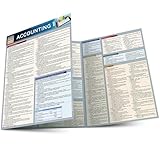
Accounting 1 (QuickStudy guide)
Laminated quick reference · $
Beats the book when: You blank on debits and credits or statement layouts and need the answer in seconds, not a chapter.
Pairs with: Financial Intelligence, Accounting Made Simple

Finance Equations & Answers (QuickStudy guide)
Formula sheet · $
Beats the book when: You are analyzing a set of statements and want every common ratio and its formula on one sheet.
Pairs with: Financial Intelligence, How to Read a Financial Report

Schaum's Outline of Financial Accounting
Solved-problem outline · $$
Beats the book when: You understand the concepts in lectures but need repetition on journal entries and adjustments before the exam.
Pairs with: Financial Intelligence, How to Read a Financial Report
When a quick reference beats the book
Accounting is the subject where working professionals most often know more than they think and less than they need. You have read a P&L for years. Then the exam asks you to record an accrual and adjust a prepaid expense, and the intuition runs out.
That is where a quick reference earns its place. When you are stuck on which side of the entry something goes, or how a cash flow statement is laid out, a laminated card answers in seconds. A textbook answers in twenty minutes and three detours.
A solved-problem outline helps with the other common gap: you followed every lecture, but you cannot yet produce the entries quickly and correctly. Accounting rewards repetition more than most subjects, and a book of worked problems gives you dozens of repetitions per topic.
None of these teach you to think about the numbers. For that, read Financial Intelligence or Accounting Made Simple first. The accounting for managers hub has the full ranking.
How to use these in the last week before an exam
Day one: redo the problems from your course you got wrong, with the quick reference open. Note every time you had to look something up. That list is what you revise.
Middle of the week: work through the outline's problems on your weak topics only, closed-book. Accruals, depreciation, inventory methods and the cash flow statement are common trouble spots, so check those first.
Two days out: take one past exam under time pressure, with no reference. Mark it honestly.
The day before: read the ratios sheet once and make sure you can explain what each ratio tells a manager as well as how to compute it. Exam questions often ask for the interpretation, and that is the part people skip.
Questions people ask
What is the best accounting quick reference for an MBA?
For a first financial accounting course, a laminated guide covering the accounting equation, journal entries and statement layouts. Pair it with a ratios sheet if your course includes financial statement analysis.
Can I learn accounting from a study guide alone?
Not well. Study guides assume you know why the balance sheet balances. Read a proper introduction first; Financial Intelligence or Accounting Made Simple are the short routes.
Do I need a solved-problem book if my course is case-based?
Less so. Case-based accounting courses reward reading statements, which the ratios sheet helps with. Problem books matter most when the exam is mechanical.