Course 08 of 12
Negotiation: the books worth your time
Preparing for deals with suppliers, customers, partners and colleagues, and holding your ground when the other side plays hard.
7 books ranked2 full reviewsUpdated
Why this matters to an executive
Most executives negotiate every week without calling it that. A price increase with a key customer, a supplier contract renewal, the headcount you need from finance, a partnership term sheet, a union agreement. The outcomes compound. A point of margin conceded in a hurry stays conceded for the life of the contract.
Commercial people often learn negotiation by imitation, which means they inherit their first boss's habits, good and bad. A structured view of the subject replaces habit with preparation: knowing your walk-away point, knowing theirs as well as you can, and knowing where value can be created before anyone argues over how to split it.
How I ranked these
I ranked on how much a book improves the next real deal, and how well it holds up when the counterparty is skilled. Breadth matters too. A book that covers preparation, the conversation and the follow-through beats one that covers a single phase brilliantly.
Negotiation Genius comes first because it does all three, and because it takes seriously the ways good negotiators fool themselves. It is the longest read here, so if you want to start lighter, begin with Getting to Yes. It gives you the vocabulary that most negotiation courses and most counterparties now share.
Read Never Split the Difference next. Voss draws on hostage negotiation and is strongest on the conversation itself: listening, labeling emotions, slowing things down. It works as a counterweight to the more rational framing of Fisher and Ury.
Bargaining for Advantage is the book for understanding your own style, and its self-assessment is worth the time. Getting Past No is the follow-up for difficult counterparts. Cialdini and Dixit and Nalebuff round out the list. They are about persuasion and game theory rather than negotiation as such, but both sharpen how you read the other side.
Where people go wrong
The common mistake is spending all the effort at the table and almost none before it. Most deals are won or lost in preparation: what you will do if there is no agreement, what the other side needs that costs you little, which issues can be traded against each other. Tactics cannot rescue a negotiation where you do not know your own alternative.
The second mistake is picking one school and applying it everywhere. Principled negotiation suits a long supplier relationship. It is weaker against a one-off counterparty playing hard. Tactical empathy helps in a tense call, and can feel manipulative in a long partnership if overused. Read across the list and choose by situation.
Negotiation also borrows from other courses. Pricing judgment comes from managerial economics, and reading the other side's numbers comes from accounting for managers.
The reading list
7 negotiation books, ranked
Foundation start anywhere · Core the heart of the course · Advanced after the core title
1 
Negotiation Genius
Deepak Malhotra & Max H. Bazerman · 2007 · Core · about 9 h · $
Harvard Business School's negotiation course in book form. The most complete single book on the subject.
Full review comingBuy on Amazon ↗
2 
Getting to Yes
Roger Fisher, William Ury & Bruce Patton · 1981 · Foundation · about 5 h · $
The vocabulary of principled negotiation: interests, options, criteria, BATNA. Strong on framework, light on hardball.
3 
Never Split the Difference
Chris Voss & Tahl Raz · 2016 · Foundation · about 7 h · $
Tactical empathy from a hostage negotiator. Entertaining, practical, and a useful counterweight to Getting to Yes.
Full review comingBuy on Amazon ↗
4 
Bargaining for Advantage
G. Richard Shell · 1999 · Core · about 9 h · $
Wharton's negotiation text, strongest on adapting to your own style. Includes a self-assessment worth taking.
Full review comingBuy on Amazon ↗
5 
Getting Past No
William Ury · 1991 · Core · about 5 h · $
The sequel to Getting to Yes for when the other side will not cooperate. Short and practical.
Full review comingBuy on Amazon ↗
6 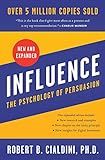
Influence
Robert B. Cialdini · 1984 · Foundation · about 9 h · $
Six (now seven) principles of persuasion that every marketer and negotiator uses whether they know it or not.
7 
Thinking Strategically
Avinash K. Dixit & Barry J. Nalebuff · 1991 · Core · about 10 h · $
Game theory for managers, with examples instead of maths. Read the updated version, The Art of Strategy, if you can find it.
Full review comingBuy on Amazon ↗
Price bands are for the paperback at the time of review. Amazon links are affiliate links; as an Amazon Associate I earn from qualifying purchases.
Questions people ask
What is the best negotiation book for executives?
Negotiation Genius by Deepak Malhotra and Max Bazerman. It covers the full arc of a deal, from preparation and BATNA analysis to creating and claiming value, and it handles the psychological traps well. Read Getting to Yes alongside it if you want the shorter classic vocabulary first.
Getting to Yes or Never Split the Difference: which should I read?
Read both, Getting to Yes first. Fisher and Ury give you the framework: interests, options, objective criteria and your walk-away alternative. Voss gives you tactics for the conversation itself, especially when emotions run high. Each covers what the other leaves thin, and together they take a weekend.
Is Getting to Yes still relevant?
Yes. Its vocabulary, particularly BATNA and separating interests from positions, is still the common language of negotiation courses. Its weakness is counterparties who will not play fair. For those, read Getting Past No by William Ury, or the chapters on hardball in Negotiation Genius.
Which negotiation book helps with difficult counterparts?
Getting Past No by William Ury, written for exactly that situation: the other side stonewalls, attacks or tries tricks. It is short and practical. Never Split the Difference also helps when the conversation turns emotional. Read Getting to Yes first, since Ury builds on it.