Course 11 of 12
Entrepreneurship: the books worth your time
Customer discovery, experiments, fundraising and the hard parts of running a young company, inside or outside a corporation.
7 books ranked2 full reviewsUpdated
Why this matters to an executive
Entrepreneurship is no longer only for founders. Large companies run new business units, corporate venture funds, internal incubators and acquisitions of young firms. Executives in those roles need the same skills as a founder: finding out what customers will pay for before the money is spent, deciding when an experiment has failed, and reading a term sheet without a lawyer translating every line.
The reverse also holds. Many people take an Executive MBA because they plan to leave and start something. For them, these books are the practical half of the course, the part that case discussions do not cover.
How I ranked these
I ranked on how much a book changes what you do in the first year of a new venture, inside or outside a corporation. Practical books beat theory here, because the expensive mistakes in a new venture are mostly practical ones.
The Mom Test comes first. It is short, it is specific, and it fixes the most common failure: building on what customers say they want rather than on what they do. Read it before your next customer meeting.
The Hard Thing About Hard Things is second because it covers what most entrepreneurship books skip: layoffs, demotions and running a company that is failing. Horowitz writes from his own time as a CEO , and the candor is rare. Venture Deals is third, and the one to read the moment fundraising or a startup investment is on the table.
The Lean Startup ranks lower than its reputation because its main idea has become standard practice. Crossing the Chasm is the right book for B2B technology products that stall after the first enthusiastic customers. The Innovator's Dilemma explains the incumbent's side, and Zero to One is for argument rather than instruction.
Where people go wrong
The common mistake is treating a new venture as a smaller version of the existing business. Corporate teams bring the planning cycle, the five-year forecast and the approval gates of the core business, then wonder why the venture moves slowly. A new venture is a search for a business model, and the plan should be a list of beliefs to test, cheapest first.
The second mistake is the founder's version: confusing activity with learning. Building features, attending events and raising money all feel like progress. The question to ask each week is what you learned about customers that you did not know before.
For the competitive logic behind which ventures last, see strategy. For the finance of raising and valuing, see corporate finance.
The reading list
7 entrepreneurship books, ranked
Foundation start anywhere · Core the heart of the course · Advanced after the core title
1 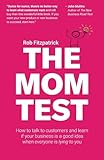
The Mom Test
Rob Fitzpatrick · 2013 · Foundation · about 2 h · $
How to interview customers without collecting polite lies. Two hours, and it will change your next customer meeting.
Full review comingBuy on Amazon ↗
2 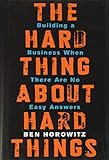
The Hard Thing About Hard Things
Ben Horowitz · 2014 · Core · about 7 h · $
The honest CEO book: layoffs, demotions, and running a company that is failing. Rare candour.
Full review comingBuy on Amazon ↗
3 
Venture Deals
Brad Feld & Jason Mendelson · 2011 · Core · about 8 h · $$
Term sheets explained clause by clause. Essential if you raise money or invest in startups.
Full review comingBuy on Amazon ↗
4 
The Lean Startup
Eric Ries · 2011 · Foundation · about 8 h · $
Build-measure-learn is now standard practice, so the book reads as obvious. The chapters on metrics still earn their place.
5 
Crossing the Chasm
Geoffrey A. Moore · 1991 · Core · about 7 h · $
Still the clearest explanation of why technology products stall after early adopters. The beachhead chapter is the one to keep.
Full review comingBuy on Amazon ↗
6 
The Innovator's Dilemma
Clayton M. Christensen · 1997 · Core · about 8 h · $
The theory every incumbent executive needs to understand, illustrated with disk drives you will have to push through.
7 
Zero to One
Peter Thiel & Blake Masters · 2014 · Foundation · about 4 h · $
Provocative essays on monopoly and contrarian bets. Useful for its questions, less so as a guide.
Full review comingBuy on Amazon ↗
Price bands are for the paperback at the time of review. Amazon links are affiliate links; as an Amazon Associate I earn from qualifying purchases.
Questions people ask
What is the best entrepreneurship book for corporate executives?
The Mom Test by Rob Fitzpatrick, for anyone launching a new product or business line. It teaches you to interview customers without collecting polite lies. Then read The Innovator's Dilemma to understand why incumbents struggle with new markets, and Venture Deals if your company invests in startups.
Is The Lean Startup still worth reading?
Partly. Build-measure-learn is now standard practice, so much of the book reads as obvious. The chapters on metrics still earn their place, particularly for corporate innovation teams that report to a budget committee. If you already run experiments with clear success criteria, read The Mom Test instead.
What book explains startup term sheets?
Venture Deals by Brad Feld and Jason Mendelson. It explains a term sheet clause by clause, including valuation, liquidation preferences and control terms. Read it before you raise money, invest in a startup or join a corporate venture team. It also helps executives negotiating with venture-backed partners.
Should I read Zero to One?
Read it for the questions, not for instructions. Thiel's essays on monopoly and contrarian bets are provocative and will sharpen how you think about where value comes from. They are not a practical manual. If you want the strategy argument made more rigorously, read 7 Powers by Hamilton Helmer.