
Strategy · Book review
The Innovator's Dilemma
Clayton M. Christensen · first published 1997 · 336 pages
- Core
- About 8 hours
- $ · paperback
By Antoine Marchand · Last reviewed
Read it if
- Leaders of established businesses facing a cheaper, worse competitor
- Corporate venturing and new-business teams
Skip it if
- You want to know how to respond, not just why you are losing
- You are a startup founder who already knows the term
Who it is for
This book is for leaders of established businesses who are watching a cheaper, worse competitor take the bottom of their market. The new entrant's product does not meet your customers' specifications. Your sales team says nobody serious will buy it. Your margins are better than theirs. Christensen's argument is that every one of those reassurances is part of the problem.
It is also for corporate venturing and new-business teams. If your job is to build something new inside a company organized to protect something old, the second half of the book explains why the parent's processes and priorities will work against you, and what structure gives a new business a chance.
I spent my career in industrial companies, which are exactly the incumbents this book is about. The disk drives are far from heavy equipment or chemicals, but the pattern Christensen describes is general enough to apply.
Who should skip it
Skip it if you want to know how to respond, not just why you are losing. The book is strongest as diagnosis. Its prescriptions, mainly to create a separate organization sized to the new market, are brief and have been debated ever since. Christensen's follow-up, The Innovator's Solution, written with Michael Raynor, was meant to fill that gap.
Skip it, too, if you are a startup founder who already knows the term. You will recognize the theory from a thousand pitch decks, and the book will not add much to how you run your company. It is written from the incumbent's chair.
The ideas that matter
Sustaining versus disruptive innovation
Christensen separates innovations that make existing products better for existing customers, which he calls sustaining, from those that start out worse on the measures mainstream customers care about but are cheaper, simpler or more convenient, which he calls disruptive. Incumbents usually win sustaining battles, even very hard technical ones. They usually lose disruptive ones.
The useful discipline for a manager is to classify a threat correctly. A competitor with a better product is a sustaining threat, and your existing playbook may work. A competitor with a worse, cheaper product that a different set of customers is happy with is a different problem.
Good management is the cause
The uncomfortable core of the book is that the companies that failed were not badly run. They listened to their best customers, invested where margins were highest and ignored small markets that could not move the numbers. Those are exactly the habits an MBA teaches and a board rewards.
That is why the theory matters to a senior executive. It says your capital allocation process, applied correctly, will steer money away from the business that eventually replaces you.
Value networks shape what you can see
Christensen argues that a firm sits inside a value network: its customers, suppliers and cost structure, which together define what counts as an attractive opportunity. A new technology that does not fit that network looks unprofitable to the incumbent, because by the incumbent's measures it is.
This explains why the same engineers who could build the new product are often not allowed to. The barrier is the economics of the network they work in, not their skill.
Performance overshoot
Technology often improves faster than customers can use the improvement. When the established product exceeds what mainstream customers need, the basis of competition shifts to price, convenience or reliability, and the cheaper entrant's "good enough" product becomes a real choice.
For a commercial leader this is the signal to watch. When customers stop paying for your next performance increment, the market is telling you something about where competition is going.
Resources, processes and values
Late in the book Christensen offers a way to assess what an organization can and cannot do, distinguishing its resources from its processes and its values, meaning the criteria by which it prioritizes. Resources can be moved; processes and values cannot easily be changed, and they are what stop a large company from pursuing a small, low-margin market. It is the most portable framework in the book.
Where it is wrong or dated
The evidence base is narrower than the theory's fame suggests. The disk drive industry carries most of the argument, with supporting cases such as mechanical excavators and steel minimills. Critics have argued that Christensen selected cases that fit. Jill Lepore's 2014 essay in The New Yorker made that case forcefully, and a 2015 study in MIT Sloan Management Review by Andrew King and Baljir Baatartogtokh found that only a minority of the cases cited as disruption matched the theory's own conditions.
The term itself has been stretched until it means "any new competitor". Christensen pushed back on that in a 2015 Harvard Business Review article with Raynor and Rory McDonald, arguing that some celebrated examples did not fit his definition. Read the book for the precise version, not the slogan.
The predictive examples have aged unevenly. The chapter on electric vehicles predates the way the modern electric car market developed, which began at the premium end rather than as a cheap, low-performance product. That does not disprove the theory, but it shows how hard it is to apply in advance.
The disk drive material is also heavy going. Christensen presents detailed data on product generations and capacity trajectories, and most readers will need to push through it.
If you only have a weekend
Read the introduction first; it states the argument plainly. Then read chapter 1 on disk drives quickly, for the shape of the evidence rather than the detail.
Next, read chapter 2 on value networks and chapter 4, on why companies find it hard to move down-market. These carry the core of the theory.
From the second half, read the chapter on matching the size of the organization to the size of the market and the chapter on assessing an organization's capabilities. Finish with the closing summary chapter, which restates the principles in a few pages. Leave the excavator and electric vehicle chapters for later.
What to read instead
If your competitive problem is not a cheaper, worse entrant, read Competitive Strategy. Michael Porter gives you the full toolkit for analyzing industry structure, rivals and positioning, which covers the far more common situation where competitors are fighting you on the same terms.
Christensen is the better choice when the threat comes from below and your normal analysis keeps telling you to ignore it. Porter is the better choice for almost everything else in a strategy course.
What to read next
Format I recommend: paperback.
Affiliate links. I earn a small commission; the price is the same for you.
About the reviewer
Antoine Marchand is an engineer by training (master's and doctorate) who took an MBA mid-career and spent more than thirty years in commercial leadership at international industrial companies, including a decade in Asia. He reads business books the way he ran his teams: looking for what actually works.
More in strategy
The full strategy reading list →
Good Strategy Bad Strategy
Richard Rumelt · 2011 · Core · about 9 h · $
“The most useful strategy book for a working executive: it teaches you to spot a fake strategy in your own planning deck.”
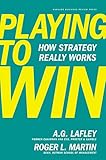
Playing to Win
A.G. Lafley & Roger L. Martin · 2013 · Core · about 7 h · $
“Five questions that turn strategy into a set of choices. Excellent structure, a little too fond of Procter & Gamble.”
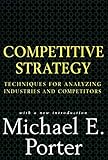
Competitive Strategy
Michael E. Porter · 1980 · Advanced · about 16 h · $$
“The source text for industry analysis. Dense and long, but every strategy framework you meet afterwards borrows from it.”
Also in: Entrepreneurship