
Strategy · Book review
Good Strategy Bad Strategy
Richard Rumelt · first published 2011 · 322 pages
- Core
- About 9 hours
- $ · paperback
By Antoine Marchand · Last reviewed
Read it if
- Anyone who writes or approves an annual strategy document
- New VPs asked to 'present the strategy' in their first quarter
Skip it if
- You need industry-analysis tools rather than judgment about strategy
- You want a step-by-step template
Who it is for
Every year you write, or approve, a document called "strategy". It has a vision statement, a set of priorities and a page of targets. Everyone signs off. Six months later nobody can say what was decided.
Rumelt wrote this book for the person holding that document. His point is that most of what organizations call strategy is nothing of the kind, and he gives you a short test to tell the difference.
It suits a new VP who has been told to "present the strategy" in the first quarter. It suits a general manager reviewing a division's plan. It also suits anyone on the receiving end who suspects the plan is empty and wants the vocabulary to say why, politely.
Who should skip it
If you need tools for analyzing an industry, look elsewhere. Rumelt is about judgment: what makes a strategy coherent. He does not give you a structured way to measure supplier power or map competitors. Competitive Strategy does that.
Skip it too if you want a template. There is no worksheet, no step-by-step process, no workshop agenda. The book teaches you to think about the problem. Some readers find that frustrating. If you need a process to run with a team, see the last section.
The ideas that matter
Bad strategy has recognizable symptoms
Rumelt names the hallmarks of bad strategy: fluff, failure to face the challenge, mistaking goals for strategy, and bad strategic objectives . Fluff is the buzzword-heavy language that sounds strategic and commits to nothing. Mistaking goals for strategy is the plan that says "grow 15 percent" and stops.
This is the most practical part of the book. Read your own planning deck against the list. Most decks fail at least one test, usually the second: they never state what the hard problem is.
The kernel: diagnosis, guiding policy, coherent action
A good strategy, in Rumelt's account, has three parts . A diagnosis says what is going on and what the critical challenge is. A guiding policy sets the general approach to that challenge. Coherent actions are the specific, coordinated steps that carry the policy out.
The value is in the order. Most plans start with actions, a list of initiatives, and never state the diagnosis that justifies them. Writing the diagnosis first forces a leadership team to agree on the problem before arguing about solutions. That one change improves most strategy meetings.
Strategy is choosing what not to do
Rumelt insists that a real strategy concentrates resources where they will have the most effect, which means refusing other demands . A plan that gives every unit a share of the priorities has avoided the choice.
This sounds easy and is politically hard. Saying no to a division head is costly. Rumelt's argument gives you a reason that is not personal: a strategy that funds everything is not a strategy.
Proximate objectives make a plan actionable
A proximate objective is a target close enough that the organization can actually achieve it . Rumelt's example is the early US space program, where engineers set reachable intermediate goals rather than aiming straight at the end state .
For a manager, this is the bridge between strategy and the operating plan. "Become the market leader" is not something a team can act on. "Win qualification at three named accounts by the end of the year" is.
Advantage comes from a few identifiable sources
The middle of the book discusses sources of strategic power: focus, design, proximate objectives, chain-link systems, using dynamics, and inertia and entropy in competitors . The chain-link idea is the one I would keep: when performance depends on every link in a chain, improving one link alone does nothing, and the weakest link sets the result .
Read this section as a set of lenses, not a checklist. Some of it is thinner than the opening chapters.
Where it is wrong or dated
The case examples are a mix of business and military history, and some business cases are snapshots from the 2000s . Companies praised for coherent strategy at the time of writing have since had mixed fortunes . That does not invalidate the argument. It is a reminder that a good strategy at one moment is not a permanent advantage.
The book is stronger on diagnosis than on execution. It tells you a plan is incoherent. It says less about how to get a reluctant leadership team to agree on a diagnosis in the first place, which is where most real strategy work stalls.
The later chapters are looser than the first part . The section on thinking like a strategist reads more like reflections than argument . Some readers will find it the most interesting part. Others will skim it.
Rumelt returned to the theme in a later book, The Crux , which focuses more on finding the critical problem. If the diagnosis step is where you get stuck, that later book may suit you better.
If you only have a weekend
Read the opening part on good and bad strategy in full . The chapters on the hallmarks of bad strategy and on the kernel are the core , and they are short enough for one evening.
Then read the chapters on proximate objectives and on chain-link systems in the middle part .
Stop there on a first pass. Come back to the rest when you have a plan in front of you that you want to test.
What to read instead
If you need to run a strategy process with a team rather than judge one, read Playing to Win. Lafley and Martin give you a structure: five linked choices that a group can work through in sequence. Rumelt tells you whether the answer is any good. Lafley and Martin give you a way to produce one.
The two books work well together, Rumelt first. For the full reading order, including Porter for industry analysis, see the strategy hub.
What to read next
 Read insteadPlaying to WinA.G. Lafley & Roger L. Martin · Core · 7 h · $
 Pair with, when short on timeManagement (QuickStudy guide)George A. Milite · Foundation · 1 h · $
Format I recommend: paperback.
Affiliate links. I earn a small commission; the price is the same for you.
About the reviewer
Antoine Marchand is an engineer by training (master's and doctorate) who took an MBA mid-career and spent more than thirty years in commercial leadership at international industrial companies, including a decade in Asia. He reads business books the way he ran his teams: looking for what actually works.
More in strategy
The full strategy reading list →Playing to Win
A.G. Lafley & Roger L. Martin · 2013 · Core · about 7 h · $
“Five questions that turn strategy into a set of choices. Excellent structure, a little too fond of Procter & Gamble.”

The Innovator's Dilemma
Clayton M. Christensen · 1997 · Core · about 8 h · $
“The theory every incumbent executive needs to understand, illustrated with disk drives you will have to push through.”
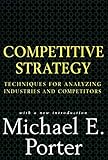
Competitive Strategy
Michael E. Porter · 1980 · Advanced · about 16 h · $$
“The source text for industry analysis. Dense and long, but every strategy framework you meet afterwards borrows from it.”