Course 09 of 12
Managerial Economics: the books worth your time
Prices, costs, competition and incentives: the economics behind pricing decisions, bids and market entry.
7 books ranked1 full reviewUpdated
Short on time? See the quick references for managerial economics →
Why this matters to an executive
Economics is the logic under most commercial decisions. Why a competitor cut prices, whether a market can support a third player, what happens to volume if you raise list prices, how much a rival will bid for the same contract. Executives make these calls with or without the theory. With it, they ask better questions of the people who bring them the numbers.
Managerial economics is microeconomics applied to a single firm: demand, costs, market structure, pricing and strategic interaction. Most EMBA students find the textbook version dry. The popular books below cover the same ground with business examples, and they make the textbook much easier to follow if your course requires one.
How I ranked these
I ranked on usefulness for commercial decisions, and on how well a book works for someone without an economics degree. A book had to explain an idea clearly enough that you could apply it to your own pricing or competitive situation.
Start with Naked Economics if you never studied economics. If you did, start with The Undercover Economist, whose chapters on pricing and scarcity are the most directly useful in this course. Harford explains price discrimination through everyday examples such as coffee shops , and the logic transfers to industrial pricing without much effort.
Third, read Thinking Strategically. Game theory sounds abstract, but Dixit and Nalebuff teach it through examples rather than mathematics, and it is the right lens for bids, price wars and competitive response. The authors later updated it as The Art of Strategy , which is worth getting if you can.
Competition Demystified is the advanced choice. It ties the economics of barriers to entry to strategy, and it pairs well with the strategy course. The behavioral books, Thaler and Kahneman, explain where real buyers depart from the models. The Baye and Prince textbook is last because most readers only need it when a course assigns it.
Where people go wrong
The common mistake is treating economics as a set of graphs to memorize for the exam. The graphs matter less than the habits of thought behind them: thinking at the margin, counting opportunity cost, asking what the other side's incentives are. An executive who has those habits will price, bid and invest better than one who can draw a perfect supply curve.
The second mistake is the reverse: dismissing the models because real people are not rational. Behavioral economics refines the classical models. It does not replace them. Learn the standard model first, then learn where it bends.
If you are mid-module and short of time, the study aids for this course cover the formulas faster than any of these books. For the cost side of pricing, see accounting for managers.
The reading list
7 managerial economics books, ranked
Foundation start anywhere · Core the heart of the course · Advanced after the core title
1 
Naked Economics
Charles Wheelan · 2002 · Foundation · about 9 h · $
Economics without equations, for people who skipped it. The best preparation for an EMBA economics module.
Full review comingBuy on Amazon ↗
2 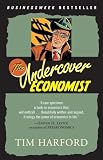
The Undercover Economist
Tim Harford · 2005 · Foundation · about 8 h · $
Pricing, scarcity and information explained through coffee and supermarkets. The pricing chapters are directly useful.
Full review comingBuy on Amazon ↗
3 
Thinking Strategically
Avinash K. Dixit & Barry J. Nalebuff · 1991 · Core · about 10 h · $
Game theory for managers, with examples instead of maths. Read the updated version, The Art of Strategy, if you can find it.
Full review comingBuy on Amazon ↗
4 
Competition Demystified
Bruce Greenwald & Judd Kahn · 2005 · Advanced · about 12 h · $$
Strips Porter down to the one force that matters most: barriers to entry. Excellent case chapters.
Full review comingBuy on Amazon ↗
5 
Misbehaving
Richard H. Thaler · 2015 · Foundation · about 10 h · $
The history of behavioural economics told by the person who built much of it. More readable than Kahneman.
Full review comingBuy on Amazon ↗
6 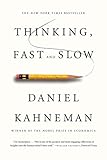
Thinking, Fast and Slow
Daniel Kahneman · 2011 · Core · about 14 h · $
Essential ideas, too long for most readers, and some of the priming chapters have not survived replication. Read selectively.
7 
Managerial Economics and Business Strategy
Michael R. Baye & Jeffrey T. Prince · 1997 · Advanced · about 35 h · $$$
A common EMBA economics textbook. Clear and applied; buy a used earlier edition unless the course needs the latest problem sets.
Full review comingBuy on Amazon ↗
Price bands are for the paperback at the time of review. Amazon links are affiliate links; as an Amazon Associate I earn from qualifying purchases.
Questions people ask
What economics book should I read before an Executive MBA?
Naked Economics by Charles Wheelan. It covers incentives, markets, information and government policy in plain English, with no equations. If you already studied economics at university, skip it and read The Undercover Economist for its pricing chapters, then Thinking Strategically for game theory.
What is the best book on managerial economics for pricing decisions?
The Undercover Economist by Tim Harford. Its chapters on scarcity and price discrimination explain why companies charge different customers different prices, and they apply directly to commercial work. For competitive pricing, bids and responses to a rival's move, add Thinking Strategically by Dixit and Nalebuff.
Do I need a managerial economics textbook?
Only if your course assigns one. Baye and Prince's Managerial Economics and Business Strategy is a common EMBA text, clear and applied. If you do need it, buy a used earlier edition unless the course requires the latest problem sets. Otherwise the popular books here teach the ideas faster.
Is behavioral economics part of managerial economics?
Increasingly, yes. Classical models assume rational buyers and sellers, and behavioral economics explains where real people depart from that. Start with Misbehaving by Richard Thaler, which is more readable than Kahneman. Then read Thinking, Fast and Slow selectively, since some of its priming chapters have not held up.