New VP: first 90 days reading
By Antoine Marchand · Last reviewed
Why this list
A new VP role tends to fail in a predictable order. First the calendar fills up, then the team drifts, then the budget surprises you, and finally the 90-day plan turns out to be a wish list. This sequence puts each book just before the problem it addresses.
The first two books are about you: how you approach the transition and how you spend your time. The middle two are about running the function, through people and through numbers. The last two are about the leadership team and the plan. Most of them sit in leadership and organizational behavior and general management, with one book each from accounting and strategy.
I kept the list short because a new VP does not have time for more. Every book here is a cheap paperback that can be finished in a week of evenings.
How to use it
Treat the sequence as a calendar, not a syllabus. Roughly, read the first two in month one, the next two in month two and the last two in month three.
If you are already in the role and behind schedule, start with the book that matches your most urgent problem. A team in conflict needs The Five Dysfunctions of a Team now, whatever week it is. A plan due Friday needs Good Strategy Bad Strategy tonight.
Keep a running note of decisions you make during the 90 days and which book, if any, shaped them. At day ninety, that note is a useful record of what you learned and what you still need.
The list
1 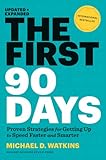
The First 90 Days
Michael D. Watkins · 2003 · Foundation · about 6 h · $
Read this before your first day, or in the first week at the latest. Watkins gives you a framework for the whole transition: diagnosing what kind of situation you have inherited, agreeing expectations with your boss, securing early wins and avoiding the common traps.<!-- VERIFY --> Everything else on this list slots into his structure, which is why it comes first and why you will reopen it at each stage.
Full review comingBuy on Amazon ↗
2 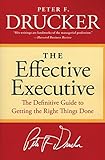
The Effective Executive
Peter F. Drucker · 1967 · Foundation · about 5 h · $
Also for the first two weeks, while your calendar is still yours to shape. Drucker argues that executive effectiveness starts with knowing where your time actually goes, then focusing on contribution and on a small number of priorities.<!-- VERIFY --> A new VP is flooded with meetings by default. Read this early, before the habits set, and decide what you will say no to.
3 
High Output Management
Andrew S. Grove · 1983 · Core · about 8 h · $
Weeks three to six, once you know your team and its outputs. Grove treats a manager's job as raising the output of the people around them, and he is precise about one-on-ones, meetings, delegation and indicators. This is when you design your operating rhythm, and Grove is the most practical guide to it I know.
4 
Financial Intelligence
Karen Berman & Joe Knight · 2006 · Foundation · about 7 h · $
Also in the first two months, because a VP owns a budget, often for the first time. Berman and Knight teach you to read your own numbers, see where they rest on estimates, and understand how your function shows up in the company's statements. Read it before your first budget review rather than after, so you can ask the finance team the right questions.
5 
The Five Dysfunctions of a Team
Patrick Lencioni · 2002 · Foundation · about 4 h · $
Month two, once you have watched your leadership team work together for a few weeks. Lencioni's model runs from absence of trust up to inattention to results, and his fable format makes it quick to read.<!-- VERIFY --> The framework is simple, sometimes too simple, but it gives you a shared vocabulary for diagnosing a team, which you need before you start changing it.
Full review comingBuy on Amazon ↗
6 
Good Strategy Bad Strategy
Richard Rumelt · 2011 · Core · about 9 h · $
Month three, when you are expected to present a plan. Rumelt's test for a real strategy (a clear diagnosis, a guiding policy, coherent actions) is the best way I know to avoid the 90-day plan that is really a list of goals. By now you have the diagnosis from the earlier months, so this book helps you turn it into something your boss can approve.