The MBA in 12 books (in order)
By Antoine Marchand · Last reviewed
Why this list
An MBA is a sequence before it is a set of subjects. The early courses teach you to read a business, the middle ones teach you to decide what it should do, and the later ones teach you to get people to do it. Read the same books in a random order and you lose most of that. You end up trying to judge a strategy before you can read a cash flow statement, or learning negotiation tactics before you know what you are negotiating for.
So this list has one book per core course, and the order is the argument. General management gives you the map. Accounting and corporate finance teach you the language the rest of the program is written in. Strategy, marketing and operations are what you do with that language. Leadership and negotiation are how you get it done through other people. Economics and decision-making explain why the people involved behave as they do. Entrepreneurship tests all of it under uncertainty, and ethics and governance reminds you how it fails.
I chose these over the famous alternatives for a simple reason: each one has to work for a busy reader working alone, without a professor to explain it. That rules out some great books.
Competitive Strategy is the foundation of the strategy course, but it is dense and written for analysts; Good Strategy Bad Strategy gives a working executive more per hour. Principles of Corporate Finance is the real finance course, and it belongs on a desk as a reference, not in a twelve-book sequence. The Little Book of Valuation covers the ideas you will use most and is written by someone who teaches valuation for a living.
For leadership, The Effective Executive was a close call. I picked High Output Management because it is more concrete about the mechanics of running a team, and it follows naturally from the systems thinking in The Goal. For negotiation, Never Split the Difference is more popular today, but its tactics make better sense once you have the principled framework from Getting to Yes.
I also left out textbooks and study aids entirely. Both have their place. Neither belongs in a list you are meant to read cover to cover.
How to use it
Read one book a fortnight. That gets you through the list in about six months, which is slow enough that each book has time to settle before the next one starts. Most of these are cheap paperbacks; none needs a textbook budget.
Keep a single page of notes per book, written for your own job: one idea you will use, one you disagree with, one decision coming up where it applies. Six months later, those twelve pages are worth more than the underlining.
Do not skip ahead to the books that look most relevant to your current role. The early ones are what make the later ones useful. If finance is your weak spot, the finance book needs the accounting book before it, not after.
If you only finish half, stop after High Output Management. The first seven books cover reading a business, valuing it, deciding what it should do, selling it, running it and managing the people who run it. That is the working core of the degree. The last five deepen it, and you can pick them up later in any order that suits the decisions in front of you.
If one book stalls you for more than a month, put it down and move to the next. A finished list with one gap beats an abandoned list with a bookmark in book four.
The list
1 
The Personal MBA
Josh Kaufman · 2010 · Foundation · about 9 h · $
Start here because it gives you the map before the territory. Kaufman covers value creation, marketing, sales, finance, systems and people in short entries,<!-- VERIFY --> so every later book on this list lands in a slot you already recognize. It is shallow by design. That is the point at step one: you are not trying to master anything yet, only to see how the parts of a business connect so that the specialist books that follow have somewhere to hang.
2 
Financial Intelligence
Karen Berman & Joe Knight · 2006 · Foundation · about 7 h · $
Accounting comes second because every other course assumes you can read the three statements. Berman and Knight write for managers, not accountants, and they spend real time on where the numbers involve judgment rather than arithmetic.<!-- VERIFY --> Once you know how profit differs from cash and why the balance sheet has to balance, the finance, strategy and operations books stop feeling like they are written in a foreign language.
3 
The Little Book of Valuation
Aswath Damodaran · 2011 · Foundation · about 5 h · $
Finance follows accounting directly, while the statements are still fresh. Damodaran reduces valuation to cash flows, growth and risk, and shows how the same logic applies to a mature company, a young one and a troubled one.<!-- VERIFY --> It is short and it does not hide the arithmetic. After this book, a discount rate or a multiple in a board deck becomes something you can question instead of something you nod at.
Full review comingBuy on Amazon ↗
4 
Good Strategy Bad Strategy
Richard Rumelt · 2011 · Core · about 9 h · $
Strategy sits fourth because you now understand where value and cash come from, and can judge whether a plan actually changes them. Rumelt's distinction between a real strategy (a diagnosis, a guiding policy, coherent actions) and a list of goals dressed as one is the most useful test I know for the documents executives are asked to approve. Read it before you sit through another planning cycle.
5 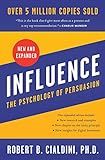
Influence
Robert B. Cialdini · 1984 · Foundation · about 9 h · $
Marketing comes next, and I chose a book about why people say yes rather than a textbook on segmentation. Cialdini's principles of persuasion explain buyer behavior, sales conversations and a good part of internal politics. Placed after strategy, it reminds you that a sound plan still has to win over customers and colleagues who are not reasoning the way your spreadsheet does.
6 
The Goal
Eliyahu M. Goldratt & Jeff Cox · 1984 · Foundation · about 9 h · $
Operations is where strategy meets the plant floor, the warehouse or the service queue. Goldratt teaches the theory of constraints as a novel about a failing factory, and the format works because you watch a manager discover that local efficiency can make the whole system worse. It sits here because you need the finance books behind you to see why throughput, inventory and operating expense are the numbers that matter.
7 
High Output Management
Andrew S. Grove · 1983 · Core · about 8 h · $
Leadership comes after operations because Grove treats management as a production process, with outputs, indicators and a manager whose work multiplies through other people. That framing only makes full sense once The Goal has taught you to think in systems. He covers meetings, one-on-ones, decisions and performance reviews with an engineer's directness. Of all the management books I know, this is the one most likely to change what you do on Monday morning.
8 
Getting to Yes
Roger Fisher, William Ury & Bruce Patton · 1981 · Foundation · about 5 h · $
Negotiation follows leadership because most of an executive's negotiating happens inside the company: budgets, headcount, priorities. Fisher, Ury and Patton's ideas of separating people from the problem, focusing on interests and knowing your alternative to a deal are the shared vocabulary of the field. Learn the principled framework first; the more tactical books make better sense once you have it.
9 
Naked Economics
Charles Wheelan · 2002 · Foundation · about 9 h · $
Economics comes ninth, later than a business school would put it, because by now you have real examples to attach the theory to. Wheelan explains incentives, markets, information and government policy without equations. Having read about pricing, persuasion and negotiation, you will see supply, demand and incentives running underneath decisions you have already made, which is a better way to learn economics than from a blank page.
Full review comingBuy on Amazon ↗
10 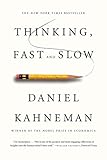
Thinking, Fast and Slow
Daniel Kahneman · 2011 · Core · about 14 h · $
Data and decision-making comes after economics because Kahneman's work is the correction to the rational actor that economics assumes. His account of the fast intuitive system and the slower deliberate one, and the biases that follow, is the best explanation I know of why smart teams make poor forecasts. It is long and uneven, so read it at this stage, when you have enough decisions behind you to recognize yourself in it.
11 
The Lean Startup
Eric Ries · 2011 · Foundation · about 8 h · $
Entrepreneurship sits near the end because it pulls the earlier courses together under uncertainty. Ries argues for testing assumptions with a minimum viable product and deciding whether to persevere or pivot based on what you learn. For executives inside large companies, the value is in applying that discipline to new products and internal ventures, where the planning methods from the strategy books often do not fit.
12 
Why Smart Executives Fail
Sydney Finkelstein · 2003 · Core · about 9 h · $
Ethics and governance comes last on purpose. Finkelstein studied a series of corporate failures and found that the people running those companies were capable, informed and often celebrated.<!-- VERIFY --> That is a sobering way to finish: after eleven books that make you more competent, this one shows how competent leadership teams still go wrong through flawed mindsets, poor information and weak oversight. It is the right antidote to finishing a reading program feeling clever.
Full review comingBuy on Amazon ↗